The Indian foods with the most protein for the fewest calories are prawns, egg whites, chicken breast, fish, hung curd made from skimmed milk and soya chunks. Each gives roughly 15–24 g of protein per 100 calories. Paneer, peanuts and chana are good protein foods too, but they bring far more calories with each gram of protein.
That difference matters when you are trying to lose fat. When you eat less, protein helps you keep muscle and stay full, so the best foods are the ones that add protein without using up much of your calorie budget.
Values below are rounded estimates from Indian and US food composition tables. Brands, recipes and cooking oil change the numbers, so treat them as a guide.
The ranking: protein per 100 calories
The last column is the one to look at. It tells you how much protein you get for every 100 calories you eat.
| Food | Protein per 100 g | Calories per 100 g | Protein per 100 kcal |
|---|---|---|---|
| Prawns, cooked | 24 g | 100 kcal | 24 g |
| Egg whites | 11 g | 52 kcal | 21 g |
| Chicken breast, skinless, cooked | 31 g | 165 kcal | 19 g |
| Fish such as rohu or surmai, cooked | 20–23 g | 110–140 kcal | 16–18 g |
| Hung curd from skimmed milk | 10 g | 60 kcal | 17 g |
| Soya chunks, dry | 52 g | 345 kcal | 15 g |
| Tofu, firm | 12 g | 110–145 kcal | 9–11 g |
| Skimmed milk | 3.4 g | 35 kcal | 10 g |
| Moong sprouts | 3 g | 30 kcal | 10 g |
| Whole eggs | 13 g | 155 kcal | 8 g |
| Cooked dal | 7–9 g | 105–120 kcal | 7 g |
| Low-fat curd | 3.5–5 g | 60 kcal | 6–8 g |
| Paneer, full-fat | 18–20 g | 260–300 kcal | 7 g |
| Chana or rajma, cooked | 9 g | 160 kcal | 5–6 g |
| Peanuts | 26 g | 570 kcal | 4.5 g |
Two things stand out. Non-veg foods top the list because they carry little fat or carbohydrate. And paneer, a vegetarian favourite, sits in the middle: it has plenty of protein, but full-fat paneer brings two to three times the calories of hung curd for each gram.
Best vegetarian picks
- Soya chunks. About 15 g of protein in a 30 g dry serving for around 105 calories. Soak, squeeze and add to a sabzi, pulao or keema-style dish.
- Hung curd. Strain curd made from skimmed or toned milk overnight. Use it as a dip, in a raita, or with fruit. Full-fat curd works too, but adds calories.
- Tofu. Firm tofu works in place of paneer in bhurji or tikka. It has less protein per 100 g than paneer, but also about half the calories, so you can eat a bigger portion.
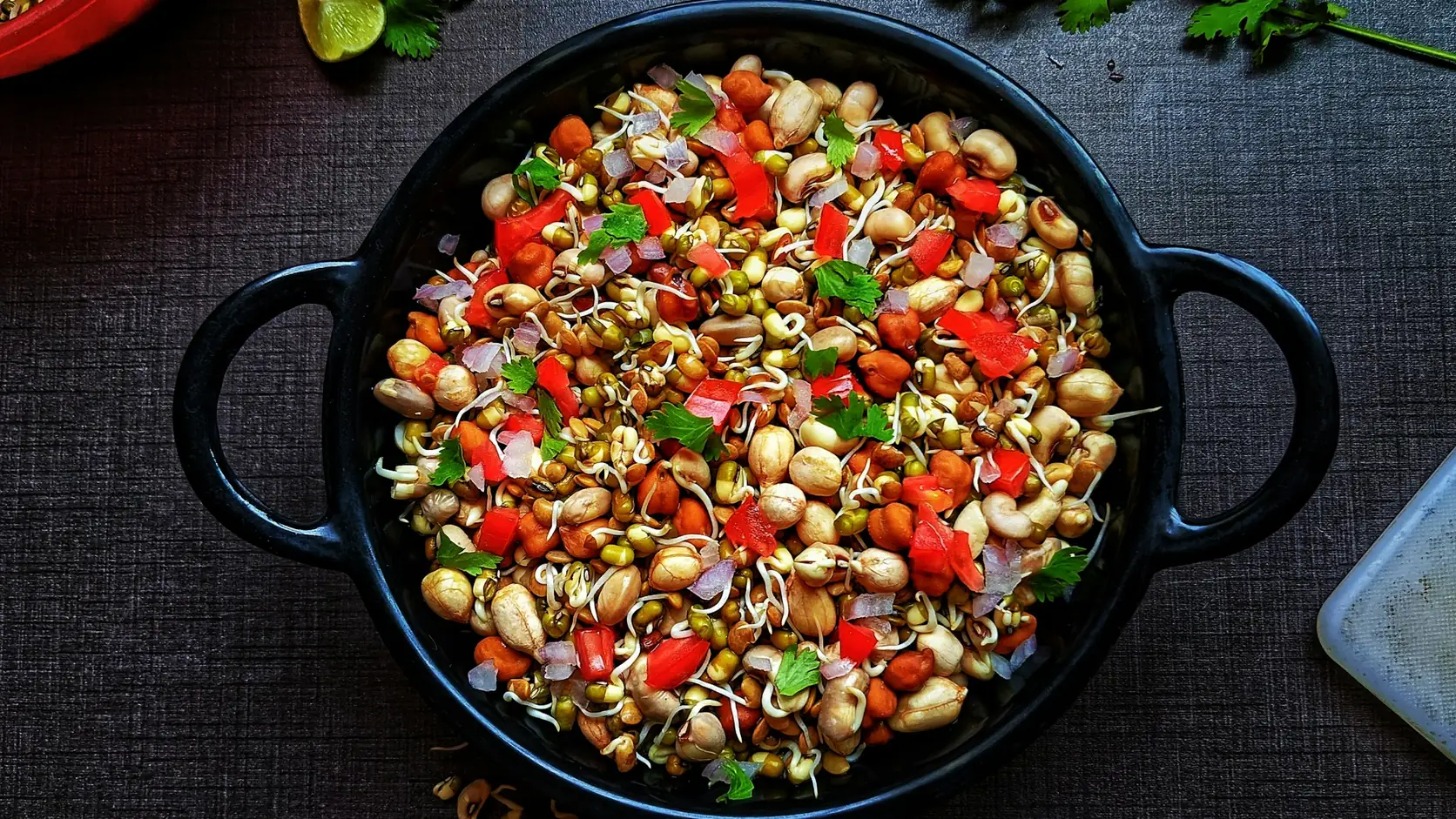
- Moong sprouts. Low in protein per bowl, but very low in calories; good for volume in a chaat or salad. Steam them lightly if you are unsure how they were stored.
- Skimmed milk. One glass gives about 8 g of protein for under 90 calories.
Dal and chana are still worth eating. They add fibre and fill you up. They just need a protein-dense partner, such as curd or soya, to give a meal real protein.
Best non-veg and egg picks
- Egg whites. Two whole eggs plus two extra whites make a high-protein omelette or bhurji for modest calories.
- Chicken breast. Grilled, tandoori or in a light curry, 100 g cooked gives about 31 g of protein.
- Fish and prawns. Steamed, grilled or in a thin curry, they are among the leanest foods you can eat. Frying or a heavy coconut gravy changes the picture.
Easy swaps that cut calories but keep protein
| Instead of | Try | What changes |
|---|---|---|
| Paneer bhurji with 150 g paneer (about 28 g protein, 420 kcal) | 75 g paneer plus 25 g dry soya chunks | About 27 g protein for roughly 300 kcal |
| Three whole-egg omelette | Two whole eggs and two egg whites | About the same protein, fewer calories |
| Chicken in a butter or cream gravy | Tandoori or grilled chicken | Same protein, much less fat |
| Peanuts as a snack | Roasted chana or a bowl of hung curd | More protein for the calories |
| Full-cream milk | Skimmed or toned milk | Same protein, fewer calories |
How to use these foods in a day
Start with your protein target. The protein calculator for Indian diets gives you a range for your weight and goal, and the calorie calculator gives a daily calorie number. Then put one food from the top half of the table into every meal:
- Breakfast: egg-white bhurji, or besan chilla with a bowl of hung curd.
- Lunch: dal, roti and sabzi, plus soya chunks or a piece of fish.
- Snack: a glass of skimmed milk, sprouts chaat or roasted chana.
- Dinner: grilled chicken or tofu tikka with vegetables.
For a full vegetarian day with amounts, see a high-protein vegetarian Indian diet.
Common mistakes
- Counting the food but not the oil. A tablespoon of oil or ghee adds about 120 calories, and it is easy to use three in one curry.
- Assuming "healthy" means low-calorie. Peanuts, nuts and paneer are nutritious, but calorie-dense.
- Relying on dal alone. One katori gives about 9 g of protein, not enough on its own for most targets.
If you want to see where your protein and calories actually come from in a normal week, log your meals for a few days. Iterofit counts both for Indian meals, so you can spot the easy swaps.
Frequently Asked Questions
Which Indian food has the highest protein and lowest calories?
Egg whites and prawns give the most protein per calorie, followed by chicken breast and fish. For vegetarians, hung curd made from skimmed milk and soya chunks are the best options.
Is paneer good for weight loss?
Paneer is high in protein, but full-fat paneer is also high in calories, about 260–300 kcal per 100 g. It can fit a weight-loss diet in smaller portions, or swapped partly for tofu or soya.
How much protein should I eat when trying to lose weight?
Healthy Indian adults need at least 0.83 g per kg of body weight a day (ICMR-NIN). People who strength train while eating less often aim for 1.6–2.2 g per kg to protect muscle. Use the protein calculator for your number.
Sources
About the author
Sudhanshu Kundu
Founder of Iterofit, building a consistency-first fitness platform for India.
Log your next workout, meal or check-in in Iterofit and start a 14-day sprint.