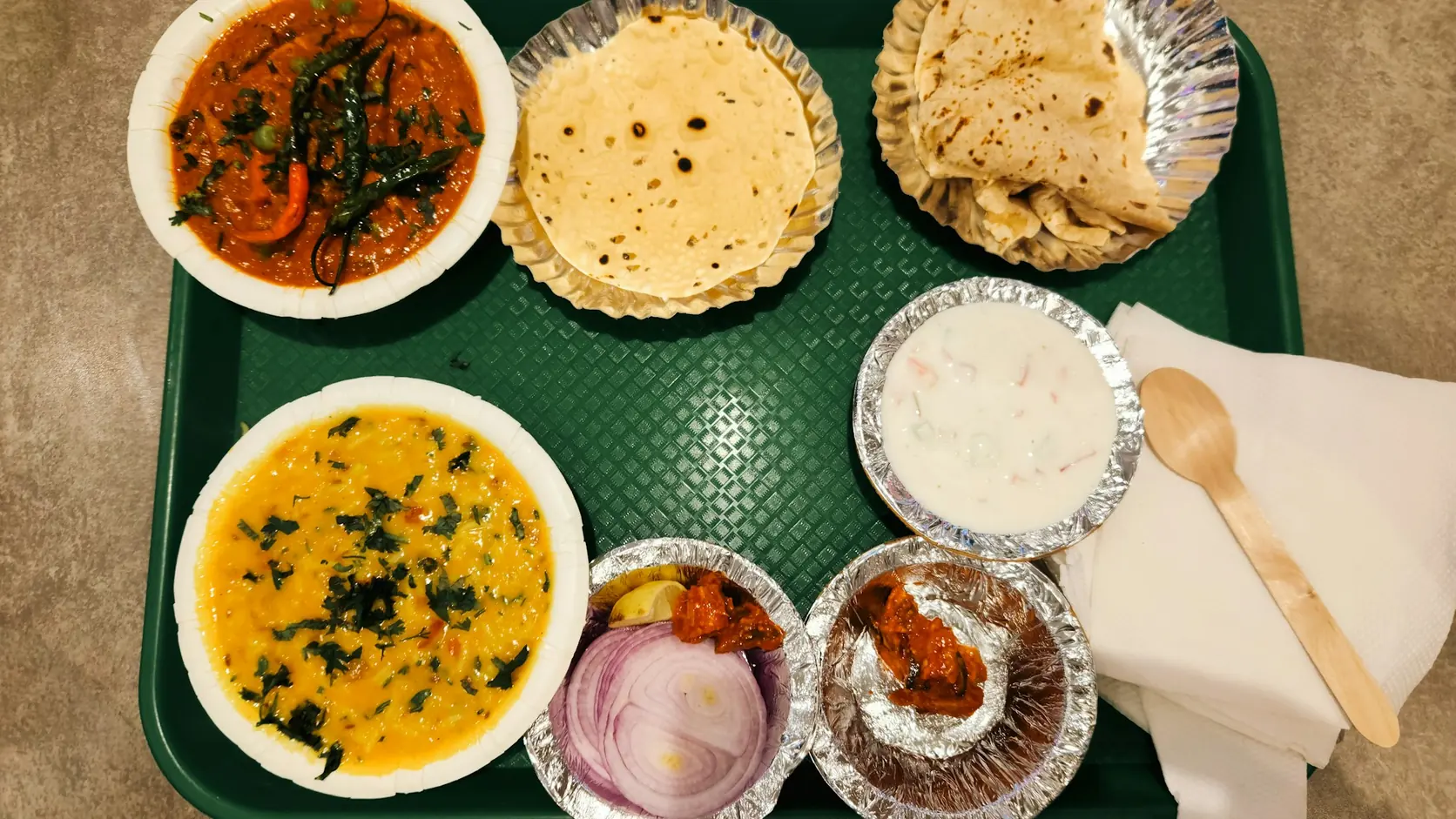
A vegetarian Indian diet can reach about 100 g of protein a day by adding one protein-rich food to every meal: besan, paneer, soya chunks, curd, milk or chana. Dal and roti alone usually fall well short, so the trick is to pair them, not replace them.
Below is a full day of ordinary Indian food that adds up to about 100 g, followed by versions for weight loss, South Indian kitchens and eggetarians.
This is general information for healthy adults. If you are pregnant, have kidney disease or another medical condition, ask a doctor or registered dietitian before changing your protein intake. Values are rounded estimates.
How much protein do you actually need?
ICMR-NIN sets 0.83 g of protein per kg of body weight a day for healthy Indian adults. People who exercise usually need more: about 1.2–1.4 g per kg if active, and 1.6–2.2 g per kg if strength training to build muscle. For a 60 kg person who lifts, that is about 96–132 g a day.
Not everyone needs 100 g. Work out your own range with the protein calculator for Indian diets, then scale the day below up or down.
A 100 g protein vegetarian day
| Meal | What to eat | Protein |
|---|---|---|
| Breakfast | 2 besan chillas (80 g besan) and 1 glass of milk (250 ml) | 25 g |
| Mid-morning | 100 g hung curd with fruit | 9 g |
| Lunch | 2 rotis, 1 katori dal, a sabzi with 30 g dry soya chunks, salad | 30 g |
| Evening | 30 g roasted chana with chai | 6 g |
| Dinner | 2 rotis, 100 g paneer bhurji or tikka, 1 katori curd | 31 g |
| Total | about 101 g |
This day comes to roughly 2,000–2,200 calories, depending mostly on how much oil and ghee go into cooking. That suits many active adults who want to maintain or gain. If you are trying to lose fat, use the lighter version below.
Why this works
- Protein at every meal. Spreading protein across four or five meals is easier on appetite than one large serving, and every meal has a clear protein anchor.
- Staples stay. Roti, dal and sabzi are still on the plate. The extra protein comes from additions, not from giving up home food.
- Mixing sources. Cereals and pulses together give a better balance of amino acids than either alone, which is why dal with roti or rice is a sound base.
Lighter version for weight loss (about 1,700 kcal)
Keep the same structure and make four changes:
- Use skimmed or toned milk and make hung curd from it.
- Swap half the paneer for tofu or soya. For example, 50 g paneer with 25 g dry soya chunks keeps protein close while cutting calories.
- Measure oil. Two to three teaspoons per meal instead of pouring from the bottle.
- One roti less at dinner, with extra sabzi or salad.
Protein stays around 90–100 g, while calories drop by roughly 300–500. The calorie calculator shows what your own target should be.
South Indian version
| Meal | What to eat | Protein |
|---|---|---|
| Breakfast | 3 idlis with sambar and 1 glass of milk | 18 g |
| Mid-morning | Sundal made with 1 katori chana | 13 g |
| Lunch | Rice, sambar, poriyal with 30 g soya chunks, 1 katori curd | 30 g |
| Evening | Buttermilk and 30 g roasted chana | 9 g |
| Dinner | 2 pesarattu (moong dal dosa) with 100 g paneer or tofu curry | 26–32 g |
| Total | about 100 g |
Eggetarian version
If you eat eggs, two whole eggs add about 12 g of protein. Replace the evening snack with 2 boiled eggs, or make the breakfast an omelette with vegetables plus a glass of milk. Egg whites add protein with very few calories; see low-calorie, high-protein Indian foods for more options.
Protein in the foods used here
| Food | Portion | Protein |
|---|---|---|
| Paneer | 100 g | 18 g |
| Besan chilla | 2 (80 g besan) | 17 g |
| Soya chunks | 30 g dry | 15 g |
| Chana or rajma, cooked | 1 katori (150 g) | 13 g |
| Tofu, firm | 100 g | 12 g |
| Hung curd | 100 g | 9 g |
| Dal, cooked | 1 katori (150 g) | 9 g |
| Milk | 1 glass (250 ml) | 8 g |
| Curd | 1 katori (200 g) | 7 g |
| Roti | 1 medium | 3 g |
For a longer list, see high-protein Indian foods for muscle building.
Make it stick
The hardest part is not the plan, it is repeating it on busy days. A few habits help:
- Prep two protein foods on Sunday: soak and boil soya chunks or chana, and hang a batch of curd.
- Keep a default breakfast you can make half-asleep, such as chilla and milk.
- Log for one week to see your real numbers before you change anything. Iterofit counts protein for Indian meals, and saved meals make the second week faster.
Frequently Asked Questions
Can vegetarians get 100 g of protein a day from Indian food?
Yes. A day built around besan, paneer, soya chunks, curd, milk and chana reaches about 100 g without supplements, as the sample day above shows.
Which vegetarian Indian food has the most protein?
Per 100 g, soya chunks (about 52 g dry) lead, followed by besan, paneer and roasted chana. Per serving, paneer, soya chunks and besan chilla are the easiest ways to add 15–18 g to a meal.
Do I need protein powder on a vegetarian diet?
No. Food can reach most targets, as this plan shows. Protein powder is a convenience if you find it hard to eat enough; check the label for protein per scoop.
Sources
About the author
Sudhanshu Kundu
Founder of Iterofit, building a consistency-first fitness platform for India.
Log your next workout, meal or check-in in Iterofit and start a 14-day sprint.