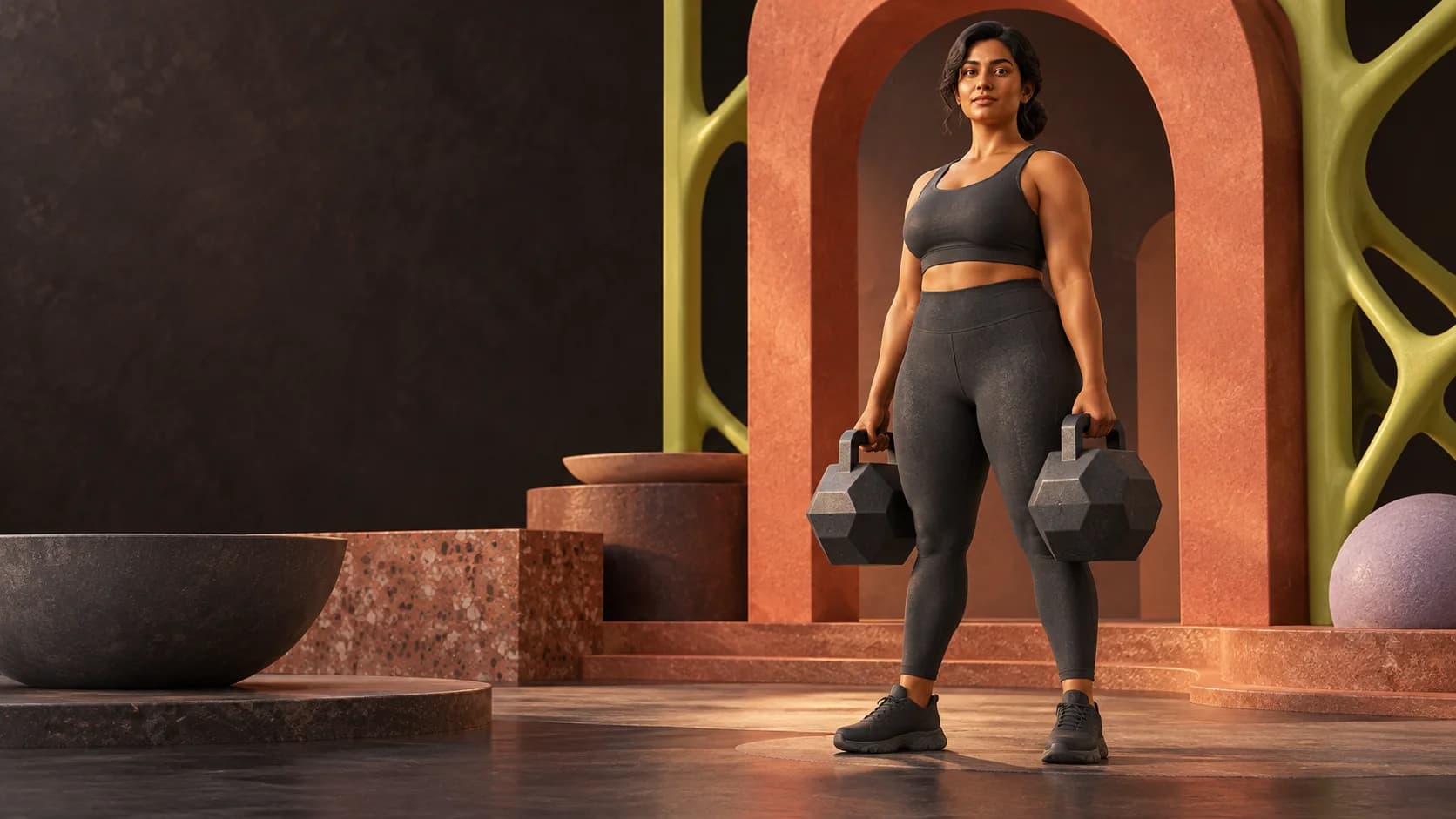
Women do not need a separate “toning” version of strength training. The same fundamentals apply: use resistance, practise the major movement patterns, recover, and progress gradually.
A 2026 meta-analysis covering 126 studies and more than 4,000 women found resistance training improved strength in both premenopausal and postmenopausal women. The authors found no reason to replace general training principles with rigid sex-specific rules; individualisation still matters.
A two-day full-body start
| Day A | Day B |
|---|---|
| Goblet squat or leg press | Split squat or step-up |
| Dumbbell or machine press | Overhead or angled press |
| Cable or dumbbell row | Pulldown or assisted pull-up |
| Hip bridge or hinge | Hamstring curl or hinge |
| Carry or trunk exercise | Carry or trunk exercise |
Begin with loads you can control through a comfortable range. Add repetitions or a small amount of resistance when technique is stable.
You will not become bulky accidentally
Muscle gain is gradual and influenced by training volume, nutrition, genetics, and time. Strength training does not instantly create a bodybuilding physique. It can improve strength, function, and body composition without requiring an aesthetic goal.
Train for capability
Useful goals include:
- Carrying luggage or groceries confidently
- Getting stronger at squats, presses, rows, and hinges
- Preserving muscle across adulthood
- Supporting sport and daily activity
- Building confidence with progressive challenges
Research in postmenopausal women suggests high-intensity, impact, and strength interventions may support bone mineral density, although study limitations matter. Anyone with osteoporosis, pregnancy, pain, pelvic-floor concerns, or another health condition should get appropriately qualified guidance.
Manage the real barriers
The hardest part may be gym confidence, commute time, family expectations, or inconsistent access—not physiology.
Train at home with adjustable dumbbells or bands if that reduces friction. Use women-only gym hours if they help initially, but choose the environment where you can learn and progress safely. A programme must fit the week it lives inside.
Track progression without comparison
Record exercises, sets, repetitions, and load. Compare with your previous performance, not another person's body or social feed.
Use the two-, three-, or four-day strength guide to choose frequency and the daily workout log to track progress. Iterofit's workout and Body features keep performance and broader progress together.
Frequently Asked Questions
Should women lift heavy weights?
Women can progressively train with heavier resistance when technique, experience, and health allow. “Heavy” is relative to the person and goal.
Is strength training safe during pregnancy?
It may be appropriate for some people, but pregnancy requires individual guidance from qualified healthcare and exercise professionals.
How many days should a beginner lift?
Two full-body days are a practical starting point for many healthy beginners.
An eight-week beginner roadmap
Spend the first two weeks learning movements and finding loads you can control. Use two sets per exercise and stop each set with several good repetitions still available. In weeks three to six, add a third set to the main movements or add a small amount of load when every repetition remains stable. In weeks seven and eight, review the log: which movements improved, which still feel awkward, and whether the schedule was realistic.
A simple session can include:
- A squat pattern such as a goblet squat or leg press
- A hip-hinge pattern such as a Romanian deadlift
- A horizontal push such as a machine press or push-up
- A pull such as a cable row or lat pulldown
- A carry or trunk exercise
You do not need a different exercise for every muscle at the start. Five well-practised movements make progress easier to see.
How to choose a starting weight
Begin lighter than your ego suggests. Perform a controlled set and ask whether you could complete another three to four repetitions with similar form. If you could do ten more, add a little load. If technique changes before the planned repetitions are complete, reduce it.
Progress can mean one more repetition, a small increase in weight, better range of motion, steadier technique, or the same work at a lower perceived effort. Small plates and machine increments are useful. There is no prize for rushing to a heavier dumbbell.
Training around the menstrual cycle
Average research findings do not create a mandatory cycle-based programme for every woman. Individual symptoms vary more than a calendar template can capture. Track energy, discomfort, sleep, and performance for several cycles before changing training. On a difficult day, reducing load, volume, or exercise complexity can protect continuity. On a normal day, there is no need to hold back simply because of a cycle phase.
Protein, recovery, and realistic expectations
Strength improves through training practice as well as muscle growth. Eat enough overall, include protein across familiar meals, and protect sleep where possible. The high-protein Indian foods guide offers practical options without requiring a Western meal plan.
Expect progress to be uneven. A disrupted week, travel, illness, or a demanding menstrual cycle does not erase earlier adaptation. Return with a slightly easier session and rebuild. The most useful programme is one that makes you more capable while fitting the rest of your life.
Seek individual guidance during pregnancy, after childbirth, with pelvic-floor symptoms, significant pain, or a medical condition affected by exercise. Qualified coaching can also make the first sessions safer and less intimidating.
Choosing a gym or coach
Look for an environment where staff explain equipment, respect boundaries, and teach technique without using fear or body-shaming. A coach should ask about experience, injuries, schedule, and goals before prescribing a difficult programme. They should be able to explain why an exercise is present and offer an alternative without treating modification as failure.
Red flags include guaranteed transformation timelines, pressure to buy unnecessary supplements, routine max-effort testing for beginners, and claims that one movement is compulsory for every body. The best early coaching builds independence: you learn how to set up equipment, choose a sensible load, record the session, and recognise when to stop.
If a women-only time or facility makes training more accessible, use it. Comfort and safety are legitimate programme variables, not signs that the workout is less serious.
Sources
About the author
Sudhanshu Kundu
Founder of Iterofit, building a consistency-first fitness platform for India.
Log your next workout, meal or check-in in Iterofit and start a 14-day sprint.