
Most healthy adults can start with two strength-training days per week. Three days can make progression easier, while four days can spread more training volume across shorter sessions. The best number is the lowest frequency that covers your goal and the highest frequency you can recover from consistently.
The 2026 American College of Sports Medicine resistance training position stand supports training at least twice per week for strength. The World Health Organization also recommends muscle-strengthening activity involving the major muscle groups on two or more days per week.
That gives you a minimum direction, not a universal schedule. Your training age, goal, job, commute, sleep, equipment, and other activity all affect what will work.
This is general fitness education for healthy adults. Pain, injury, pregnancy, chronic conditions, or a long period of inactivity may require individual advice from a qualified professional.
The short answer: 2, 3, and 4 days can all work
| Days per week | Best fit | Simple structure | Main trade-off |
|---|---|---|---|
| 2 days | Beginners and very busy weeks | Two full-body sessions | Sessions may be slightly longer |
| 3 days | Most people building a steady habit | Three full-body sessions or full body / upper / lower | Requires three reliable calendar slots |
| 4 days | Intermediate lifters or shorter sessions | Upper / lower repeated twice | More weekly transitions and recovery planning |
| 5+ days | Advanced or highly specific goals | Specialised split | Easy to add complexity without useful work |
You do not earn extra results simply by visiting the gym more often. Frequency is a way to organise enough high-quality weekly work.
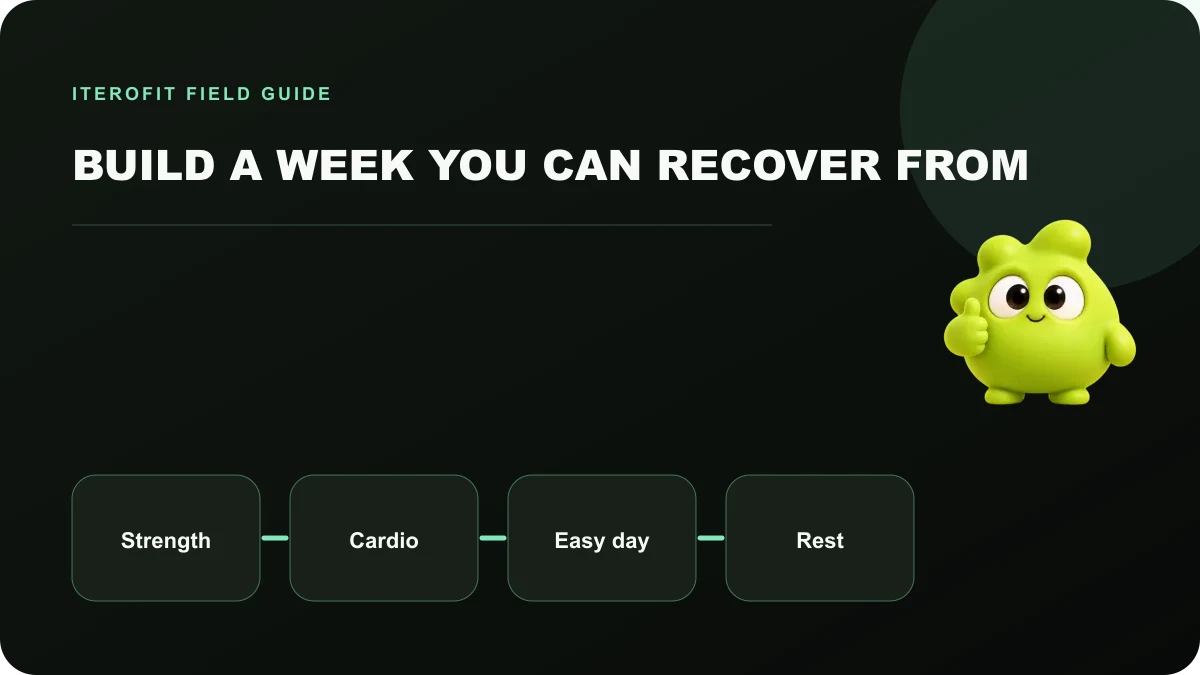
Two days per week: the strongest starting point
Two full-body workouts can train every major muscle group twice without crowding the week. This is often the most realistic option for a beginner, a parent, a student during exams, or an Indian professional managing a long commute.
A simple template is:
Day A
- Squat or leg press
- Push-up, machine press, or dumbbell press
- Cable, machine, dumbbell, or band row
- Hip bridge or Romanian deadlift
- Carry or trunk exercise
Day B
- Split squat or step-up
- Overhead or angled press
- Pulldown, assisted pull-up, or band pull
- Hip hinge or hamstring curl
- Carry or trunk exercise
The exact exercise matters less than covering the major movement patterns with movements you can perform safely and progress. Home training counts: bands, dumbbells, and bodyweight variations can provide meaningful resistance.
Three days per week: more practice, flexible volume
Three days is a useful middle ground. Full-body sessions on Monday, Wednesday, and Friday—or any similar pattern—give regular practice while keeping recovery days between sessions.
You can rotate the emphasis:
- Day 1: squat, horizontal push, row
- Day 2: hinge, vertical push, pulldown
- Day 3: single-leg work, mixed upper body, carries
Each day can still include the whole body. The emphasis simply prevents every session from feeling identical.
Three days can also help when a two-day session feels too long. The same weekly work can be distributed into smaller pieces.
Four days per week: useful when volume grows
A four-day upper/lower split is common because each major area receives two weekly sessions:
- Monday: upper body
- Tuesday: lower body
- Thursday: upper body
- Saturday: lower body
This structure suits people who enjoy training, recover well, and need more weekly sets for strength or muscle growth. It also keeps individual sessions focused.
Four days is not automatically more advanced or more effective. If work travel causes you to miss one lower-body day every week, a three-day full-body plan may produce a better real-world result.
Count muscle exposure, not only gym visits
Imagine two schedules:
- Five-day split: chest, back, shoulders, arms, legs
- Three-day plan: full body, full body, full body
The first schedule has more gym days, but each major muscle group may receive only one direct weekly session. The second has fewer visits but more frequent exposure.
This is why “How many days do you train?” is incomplete. A better question is: “How often does the programme train each major muscle group with useful, recoverable work?”
Choose frequency from your real week
Use this decision rule:
- Start with two days if you are new or your schedule is unpredictable.
- Add a third day after the first two are stable for several weeks.
- Add a fourth day only when it solves a problem—such as sessions being too long or weekly volume being difficult to fit.
- Reduce frequency when sleep, soreness, performance, or life stress consistently worsens.
Your plan should survive normal life: office deadlines, family events, travel, festivals, and poor-weather days. A routine that only works in a perfect week is not yet a routine.
For the behaviour side of the system, read how to build a consistent workout habit.
How hard should each session be?
Frequency and effort interact. Four very demanding sessions can be harder to recover from than two moderate sessions.
The 2026 ACSM review found that training to momentary muscle failure did not consistently improve outcomes. You can finish many working sets knowing that another controlled repetition or two might have been possible. The set still needs to be challenging enough to create a reason to adapt.
Progress gradually. Add a repetition, a small amount of load, a set, or a harder variation when technique remains controlled. Do not increase every variable at once.
What to track each week
A useful workout log records:
- Training days completed
- Exercise and variation
- Sets and repetitions
- Load or band level
- A brief effort or technique note
- Pain or unusual discomfort that changes the session
Review the week, not just the last workout. Are the major muscle groups covered? Are loads or repetitions gradually moving? Are you recovering in time for the next session? Did the schedule work in real life?
The 2026 ACSM guidelines explained provide the evidence behind this simple approach.
What if you miss a workout?
Do not cram two missed sessions into one punishment workout. Continue with the next planned session, or shift the schedule while preserving recovery.
For a two-day plan, complete Day A when you return, then Day B later in the week. For a three-day rotating plan, continue the rotation instead of forcing the calendar to reset every Monday.
This makes the programme resilient. Consistency is the ability to return, not the absence of disruption.
Frequently Asked Questions
Is strength training twice a week enough?
Yes, two well-designed full-body sessions can train the major muscle groups twice per week and provide a strong starting point for general health and progress.
Is three days a week better than two?
It can provide more practice or make weekly volume easier to distribute, but it is only better if you can recover and maintain it. Two completed sessions beat three planned sessions that rarely happen.
Can I strength train every day?
Daily activity can be healthy, but hard resistance training for the same muscles every day is unnecessary for most adults. Daily plans need careful control of muscle groups, volume, and intensity.
How many rest days should I take?
There is no single number. A two- or three-day full-body programme commonly uses at least one non-lifting day between sessions. Recovery needs depend on training stress, sleep, nutrition, and individual response.
Can walking or cardio happen on rest days?
Yes. A rest day from lifting does not have to mean complete inactivity. Walking or appropriately dosed cardio can fit between strength sessions if it does not interfere with recovery.
Choose two days you can protect, train the whole body, and log what you complete. Once that rhythm is reliable, add training only when it makes the plan more useful. Iterofit helps keep workouts and weekly consistency in one place.
Sources
About the author
Sudhanshu Kundu
Founder of Iterofit, building a consistency-first fitness platform for India.
Log your next workout, meal or check-in in Iterofit and start a 14-day sprint.