Your wearable says recovery is 41. You feel fine. Should you skip the gym?
Usually, one recovery score should start a check-in, not make the decision for you. Wearables are useful for longitudinal patterns, but readiness scores combine imperfect measurements through proprietary formulas.
What is inside a recovery score?
Depending on the device, the score may combine:
- Overnight heart rate and heart-rate variability
- Estimated sleep duration and stages
- Recent activity or training load
- Respiratory rate or skin temperature
- Your recent personal baseline
The inputs, weighting, and score bands differ by manufacturer. Two devices can interpret the same night differently.
HRV is personal
Heart-rate variability describes variation between beats. Higher is not always better, and comparison with someone else's number is rarely useful. Age, sleep, alcohol, illness, stress, training, measurement timing, and device method can all influence it.
Wrist wearables usually estimate pulse-rate variability optically rather than recording clinical ECG-derived HRV. The signal is generally more useful at rest or during sleep than during movement.
What wearables do reasonably well
| Metric | Practical use | Important limitation |
|---|---|---|
| Resting heart rate | Follow your personal baseline | Illness, heat, and stress can shift it |
| Sleep versus wake | See broad sleep patterns | Quiet wakefulness may be counted as sleep |
| HRV trend | Add context to recovery | Device methods and nightly noise vary |
| Workout heart rate | Guide steady activity | Accuracy can fall during rapid movement |
| Recovery score | Prompt reflection | The composite score has no universal standard |
Consumer technology should not diagnose a sleep disorder, arrhythmia, overtraining, or illness. Concerning symptoms belong with a qualified professional regardless of the score.
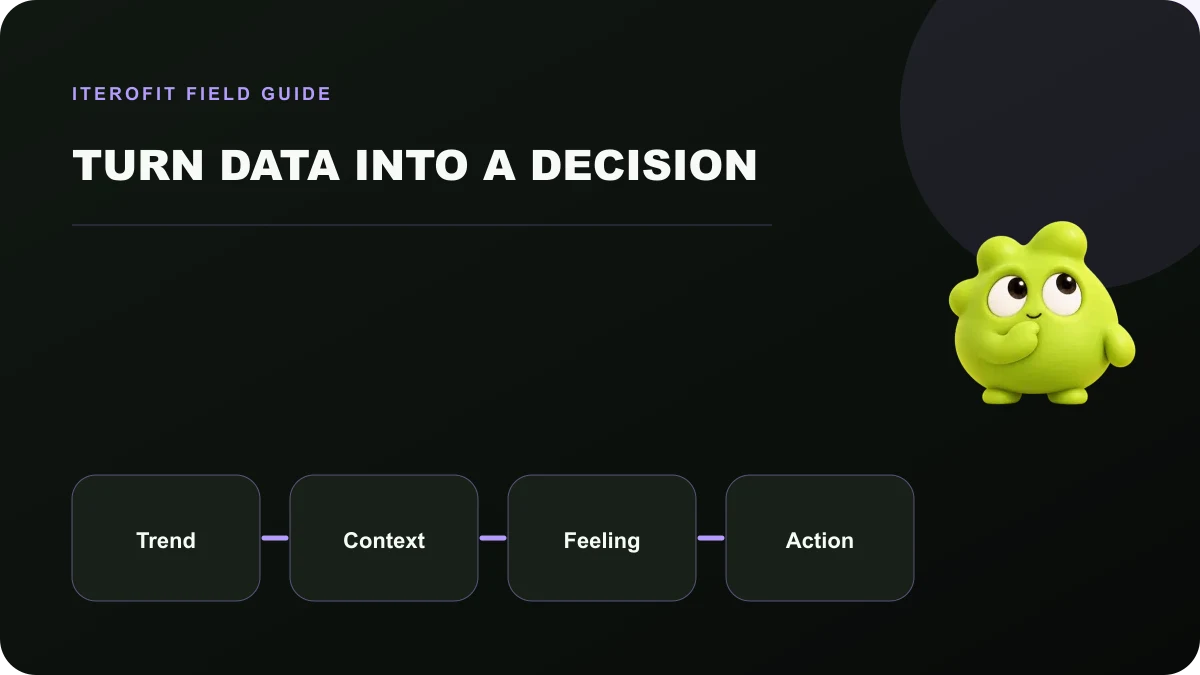
Use a three-signal check
Before changing training, review:
- The trend: Is this one unusual night or a multi-day shift?
- How you feel: Energy, soreness, mood, and illness symptoms matter.
- Performance context: Did recent sessions feel normal, or has performance declined?
If only the score is low, begin the warm-up and reassess. You might train normally, reduce volume, or choose an easier session. If the score, symptoms, and performance all point down, recovery deserves more weight.
Avoid recovery-score anxiety
Checking a sleep score can make some people feel worse about an ordinary night. Do not let an algorithm overwrite direct experience or create a need to optimise every minute.
Track device trends beside a quick mood and recovery check-in. Iterofit's Body and consistency features can hold that human context even when a wearable cannot.
Frequently Asked Questions
Is a low HRV bad?
Not by itself. Interpret it relative to your normal range, measurement conditions, symptoms, and recent trend.
Are sleep stages accurate on smartwatches?
They are estimates. Sleep-versus-wake detection is generally stronger than detailed stage classification.
Should I cancel a workout because readiness is low?
Not automatically. Use the score with how you feel, your recent load, and the warm-up response.
A seven-day recovery decision framework
Use one week to learn how the score behaves before letting it influence training. Each morning, record the wearable result, sleep duration, mood or energy, soreness, and the previous day's training. Do not change the plan solely because of the number during this observation week.
After enough mornings, use a simple traffic-light decision:
| Pattern | Possible action |
|---|---|
| Score near baseline, normal energy, warm-up feels good | Train as planned |
| One weak signal, others normal | Begin normally and reassess after warm-up |
| Several weak signals for two or more days | Reduce optional volume or intensity |
| Illness symptoms, chest pain, fainting, or unusual breathlessness | Stop and seek appropriate medical advice |
This framework prevents a single noisy reading from controlling the day. It also prevents you from ignoring a repeated pattern simply because motivation is high.
Measure under similar conditions
HRV is sensitive to measurement conditions. Compare readings taken at a similar time, position, and routine. Alcohol, travel, illness, dehydration, menstrual symptoms, late meals, and psychological stress can all affect the result. A change can be real without meaning your fitness declined.
Different devices may use different sensors, time windows, and proprietary algorithms. When you switch devices, establish a new baseline instead of comparing the raw score directly. The coloured readiness label is a product interpretation, not a universal physiological unit.
Three examples
Low score, good feeling: your sleep schedule changed, but the warm-up is normal. Continue while keeping the session adjustable.
Normal score, poor feeling: you have a headache and unusual fatigue. Trust the broader context; a green screen does not certify that you are ready.
Several low days after hard training: reduce demanding work, keep gentle movement if comfortable, prioritise food and sleep, and watch whether the trend normalises.
Avoid making recovery another performance contest
Checking repeatedly, chasing a perfect HRV number, or feeling guilty about a low score defeats the purpose. Hide the metric for a few days if it increases anxiety without improving decisions. A mood and sleep recovery log can offer useful context without pretending one number knows everything.
Wearables are strongest at supporting pattern recognition. Use them to ask a better question—“What adjustment helps me train well across the week?”—not to outsource every decision.
What to review each month
Once a month, look at the relationship between recovery trends and behaviour rather than the average score alone. Did low readings follow late nights, alcohol, travel, unusually hard sessions, illness, or work stress? Did a small training adjustment improve the next few days? Was the score unrelated to actual performance?
Keep only the observations that lead to repeatable action. “My score falls after late meals” is useful if changing meal timing improves sleep. “My HRV was 41” has little meaning without your baseline and context.
Do not compare your raw HRV with friends or influencers. Age, genetics, measurement method, and many other factors differ. Personal direction over time is the relevant signal. If the device does not improve decisions after an honest trial, turning off readiness notifications can be the healthiest use of the technology. Useful technology should reduce uncertainty over time, not create a daily test you feel compelled to pass. The goal is confidence in your own patterns, supported by data rather than controlled by it.
Sources
About the author
Sudhanshu Kundu
Founder of Iterofit, building a consistency-first fitness platform for India.
Log your next workout, meal or check-in in Iterofit and start a 14-day sprint.