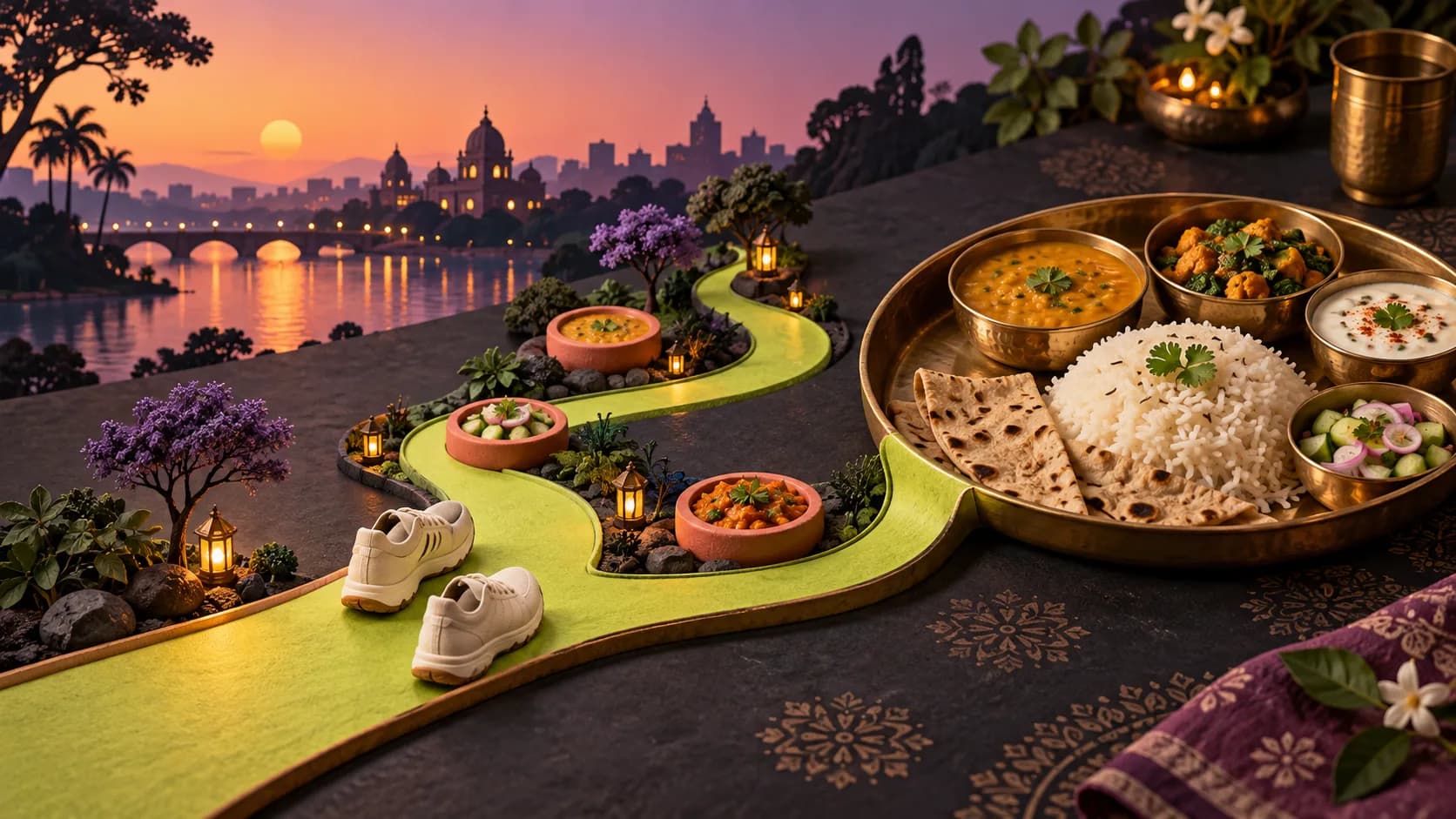
A comfortable 10-minute walk after a meal can interrupt sitting and modestly reduce the immediate rise in blood glucose. It is a useful routine, not a licence to ignore the meal or a treatment for diabetes.
What the evidence supports
A systematic review found post-meal exercise reduced postprandial glucose excursions more than exercising before the meal or remaining inactive. A small 2025 crossover trial found a comfortable 10-minute walk immediately after glucose intake reduced two-hour glucose exposure compared with rest.
The studies differ in population, meal, timing, and protocol. The direction is encouraging, but the exact “best” number of minutes is not settled for every person.
A practical post-meal routine
- Finish the meal without rushing.
- Begin a comfortable walk when it feels practical.
- Keep the pace conversational for about 10 minutes.
- Use a safe, well-lit route or walk indoors.
This is not the time for sprints or a hard workout. People with diabetes, reflux, dizziness, cardiovascular conditions, or medication affecting glucose should follow their clinician's advice.
Why it fits Indian meals
Lunch and dinner often already create a natural cue: clear the plate, then walk around the building, terrace, colony, office corridor, or nearby park.
The routine can be especially helpful when a rice- or roti-based meal is followed by a long seated commute or screen time. The walk does not “cancel” carbohydrate or calories; it simply adds light muscle activity and breaks sedentary time.
Which meal should you choose?
Start with the meal after which you are most likely to sit. For many people that is dinner. For office workers it may be lunch.
One reliable walk is better than planning three and maintaining none. Attach it to an existing cue, keep shoes accessible, and have an indoor option for heat, rain, pollution, or poor lighting.
How it fits a full programme
Post-meal walking supports daily movement. It does not replace progressive strength training, longer aerobic work, adequate sleep, or appropriate nutrition.
Combine it with exercise snacks during desk-heavy days and use Japanese interval walking separately when you want a more structured cardio session.
Log the habit, not a guessed calorie burn. Iterofit's consistency tracking can show whether the after-dinner walk is becoming part of the week.
Frequently Asked Questions
How soon should I walk after eating?
Evidence generally favours beginning relatively soon, but comfort and individual medical guidance matter. You do not need to start the second the meal ends.
Is 10 minutes enough?
Ten minutes is a practical evidence-informed starting point. Longer walking can add activity if it remains comfortable and fits your plan.
Does walking after dinner cause digestion problems?
A gentle walk is comfortable for many people, but individual responses vary. Avoid high intensity and stop if symptoms occur.
A two-week post-meal walking experiment
Choose one meal you eat at a fairly consistent time. For the first week, walk easily for 10 minutes after that meal on four days. Note the meal, the approximate start time, walk duration, and how your digestion and energy felt. In week two, repeat the same plan. Consistency makes the experiment easier to interpret than walking after breakfast one day and after a late restaurant dinner the next.
The walk can begin soon after eating when comfortable. There is no need to race out of the chair. Put away the plate, change footwear if needed, and start at a pace that allows relaxed conversation. If a large meal causes discomfort, wait a little longer or shorten the first walk.
Practical Indian routines
- After lunch at work: walk the corridor, building compound, or a safe nearby loop before returning to the desk.
- After dinner with family: make the walk a shared routine rather than another isolated workout.
- During hot or polluted conditions: use an indoor corridor, treadmill, or gentle marching circuit.
- When time is tight: five minutes now and five minutes later is still movement; do not abandon the habit because ten continuous minutes is unavailable.
The routine pairs especially well with meals that are normally followed by long sitting. It should not become punishment for rice, sweets, or a celebration meal.
What to track—and what not to claim
Track completed walks, duration, perceived effort, and perhaps pre- and post-meal glucose only when a healthcare professional has recommended monitoring. Consumer wearables can capture time and steps, but estimated calories are not precise enough to decide how much food you “earned.”
Post-meal walking may support glucose management, but it is not a substitute for prescribed medication, an overall activity plan, adequate sleep, or appropriate nutrition. People using insulin or glucose-lowering medication may have individual timing and safety considerations. Discuss changes with the clinician managing your care.
Common mistakes
The most common mistake is walking too hard. Running, steep intervals, or a demanding circuit immediately after a large meal can be uncomfortable and is unnecessary for this purpose. Another is making the rule so strict that one missed walk feels like failure. Review the weekly pattern instead.
Connect the habit to practical Indian meal logging if you want context, but keep the log short. “Dinner, 10-minute easy walk, felt comfortable” is often enough to support the next decision.
Progress the habit carefully
After two consistent weeks, choose one progression: extend the walk to 12–15 minutes, add a second meal on a few days, or make the route slightly more purposeful while preserving comfortable breathing. Do not change every variable together.
The habit can also stay at ten minutes indefinitely if it solves the real problem—breaking up sitting and creating regular movement. More is not automatically better when it crowds out sleep, family time, or structured training.
During travel or celebrations, keep a flexible version. Walk around the hotel, railway platform, building corridor, or neighbourhood when safe. If the routine is missed, resume after the next suitable meal. The health value comes from the repeated pattern, not maintaining an unbroken streak. A family member can make the routine easier and safer at night, while conversation naturally keeps the pace gentle.
Sources
About the author
Sudhanshu Kundu
Founder of Iterofit, building a consistency-first fitness platform for India.
Log your next workout, meal or check-in in Iterofit and start a 14-day sprint.