
Hybrid training combines resistance training and endurance training inside the same week. You can build strength and aerobic fitness together; the plan simply needs priorities, sensible volume, and recovery.
A 2026 umbrella review covering 17 meta-analyses found concurrent training improved aerobic capacity compared with resistance training alone, while strength, power, and muscle growth were broadly comparable. The feared “interference effect” is most relevant when training volume, fatigue, and goals are poorly managed.
Start with the goal hierarchy
Decide what matters most for the next training block:
- Strength first, cardio second
- Running or endurance first, strength second
- Balanced general fitness
Both qualities can improve, but one priority helps decide session order and weekly volume.
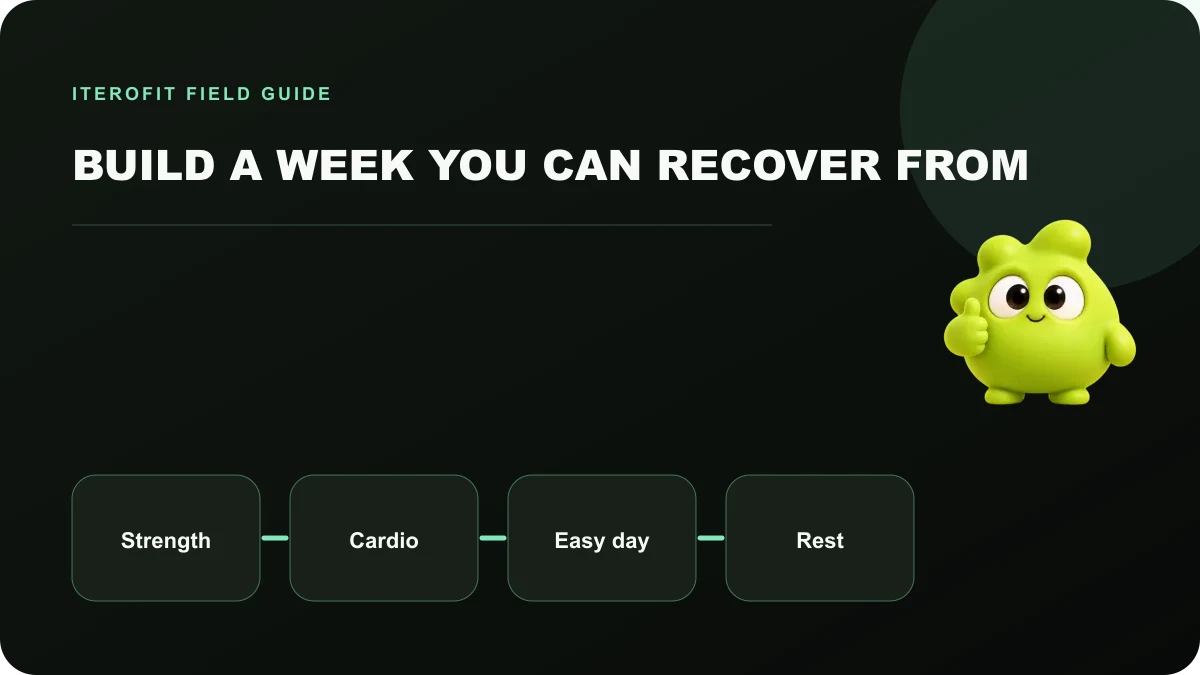
A balanced three-day plan
| Day | Main work | Purpose |
|---|---|---|
| Monday | Full-body strength | Progress key lifts |
| Wednesday | Zone 2 cardio | Build repeatable aerobic volume |
| Saturday | Full-body strength plus short easy cardio | Practise both without excessive fatigue |
A four-day plan can use two strength and two cardio sessions. Keep at least one genuinely easy cardio day.
If strength and cardio share a session
Do the priority first. Research does not show one sequence universally changes every long-term outcome, but strength before endurance may favour strength quality when that is the main goal.
Separating demanding sessions by several hours—or placing them on different days—can reduce immediate fatigue. Most recreational trainees do not need a complicated schedule; they need to avoid pairing hard lower-body lifting with hard running every time.
Control these three variables
- Hard sessions: Count strength, intervals, and long demanding sessions together.
- Lower-body load: Running and squats both create leg fatigue even though the logs look different.
- Recovery: Sleep, appetite, soreness, mood, and performance trend matter.
If both running pace and lifting performance decline for multiple sessions, reduce volume before adding more recovery technology.
Track the whole week
Log strength sets and loads, cardio duration and effort, and a short recovery note. That connects causes and outcomes better than keeping lifting in one app and running in another.
Use the Zone 2 guide for easy aerobic work and the ACSM strength guidelines for resistance-training priorities. Iterofit's all-in-one tracking keeps both sides of hybrid training visible.
Frequently Asked Questions
Does cardio kill muscle gains?
Not automatically. Poorly managed fatigue and high endurance volume may interfere with specific goals, but concurrent training can improve aerobic fitness while preserving useful strength and hypertrophy outcomes.
How many days should a beginner train?
Two strength days and one or two manageable cardio sessions are a practical starting structure for many healthy beginners.
Should I run before or after lifting?
Do the priority first when both happen together. Separate demanding sessions when possible if performance in both matters.
Four weekly templates
The best split depends on your training age, goal, and schedule. These examples show how the same principles can fit different weeks.
Three days: minimum effective structure
- Monday: full-body strength
- Wednesday: steady cardio or intervals
- Saturday: full-body strength
This works well for beginners and busy adults. Keep ordinary walking on other days and avoid turning every walk into another hard session.
Four days: balanced development
- Monday: lower-body strength
- Tuesday: upper-body strength
- Thursday: steady cardio
- Saturday: full-body strength or intervals, depending on the main goal
Five days: strength priority
- Three strength sessions
- One easy aerobic session
- One interval or sport session
Place the interval day away from the most demanding lower-body session. If legs remain heavy, replace intervals with easy cardio before adding more volume.
Five days: endurance priority
- Two full-body strength sessions
- Two easy aerobic sessions
- One long or higher-intensity endurance session
Strength volume can be modest while still supporting muscle and force production. The purpose is to complement the endurance goal, not win a separate bodybuilding programme at the same time.
Manage the interference problem in real life
Strength and endurance adaptations are not mutually exclusive, but fatigue can reduce the quality of one session. The practical solution is prioritisation. Put the most important work when you are freshest, separate hard sessions by several hours or different days when possible, and keep easy cardio genuinely easy.
Running tends to create more impact and muscle damage than cycling at a comparable aerobic intent, so exercise mode matters. A lifter with sore knees may tolerate cycling, rowing, or incline walking better than repeated running. A runner should keep some running because specificity matters, while using strength work to support rather than replace it.
How to know the plan is too dense
Watch for a pattern, not one difficult day. Warning signs include declining loads across several strength sessions, easy paces requiring unusually high effort, persistent soreness, disrupted sleep, irritability, or losing enthusiasm for every session. First reduce optional volume or intensity; do not automatically abandon the entire plan.
Review the same signals used in a daily workout log: performance, effort, recovery, and attendance. A hybrid plan succeeds when both qualities can improve over months, not when one heroic week contains every possible workout.
Fuel and recover for both demands
Hybrid training often fails because the schedule expands while food and sleep stay unchanged. Eat enough to support the workload, distribute protein across the day, and use carbohydrate around demanding endurance or lifting sessions when it improves performance. Hydration matters more in hot conditions and during long sessions.
You do not need a special supplement stack. First protect sleep, sensible session spacing, and at least one genuinely easy or rest day. Add training only when current work is being absorbed.
Every fourth to eighth week, depending on experience and fatigue, consider a lighter week with less volume or intensity. The exact interval is individual; the point is to create room for adaptation before performance forces you to. If pain changes movement or persists, get it assessed rather than solving every problem by changing the split. Keep the plan long enough to learn from it, then change one variable at a time so the next block produces usable feedback. That restraint makes it easier to identify which combination actually works for you.
Sources
About the author
Sudhanshu Kundu
Founder of Iterofit, building a consistency-first fitness platform for India.
Log your next workout, meal or check-in in Iterofit and start a 14-day sprint.