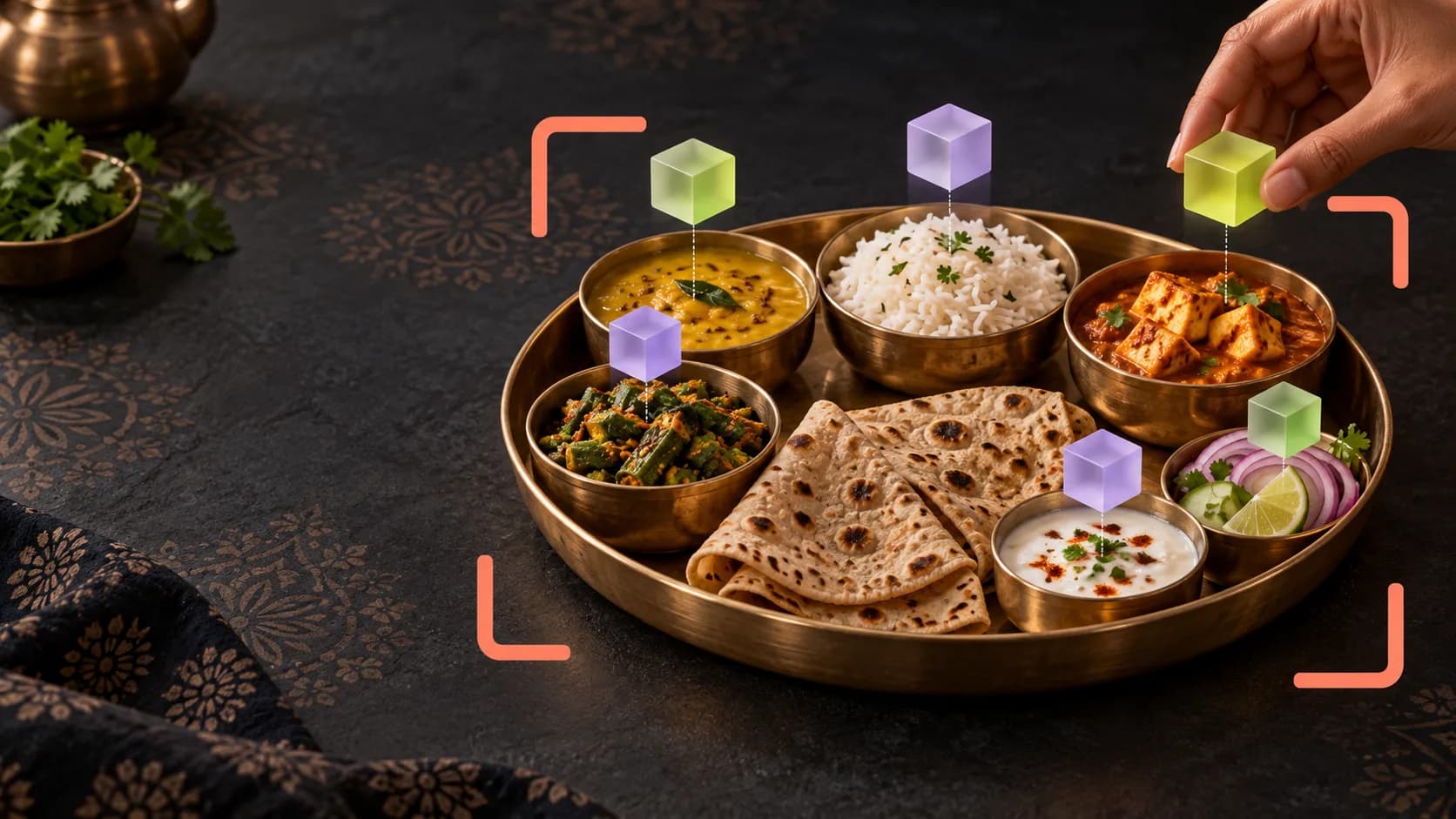
An AI food scanner can often recognise dal, rice, roti, paneer, and sabzi from a photo. It cannot directly see the grams, recipe, cooking oil, or ingredients hidden inside the dish.
The right expectation is a fast editable estimate, not laboratory measurement.
Where the error comes from
| What AI sees | What it may not know |
|---|---|
| A bowl of dal | Bowl depth, water ratio, tadka oil |
| Two rotis | Diameter, thickness, flour blend, ghee |
| Paneer curry | Paneer weight, cream, cashew, oil |
| Biryani | Rice quantity, meat cut, oil, serving depth |
| Mixed thali | Which items were finished or shared |
Research on image-based assessment shows wide variability. In one evaluation of general-purpose multimodal models, energy estimates had mean absolute percentage errors around 36% for the better-performing models, with larger portions systematically underestimated. A 2026 hospital-meal study found stronger results for energy and carbohydrates than for protein and fat.
Indian mixed dishes add recipe variation that a photograph cannot resolve by itself.
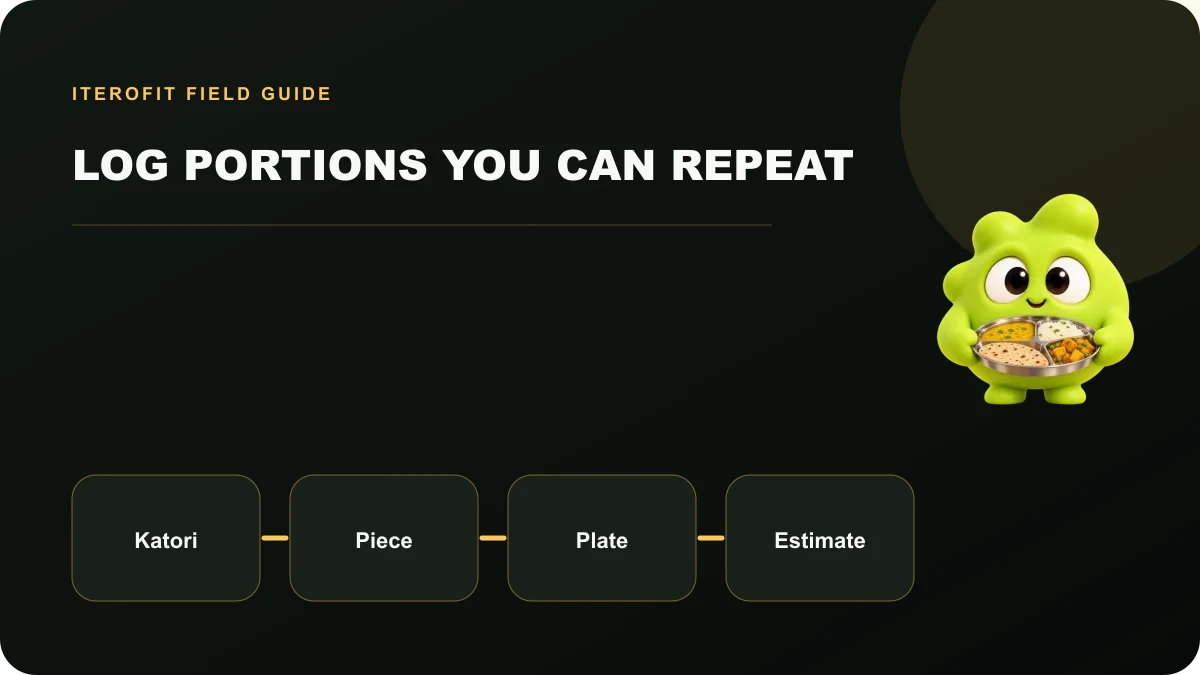
Use a human-in-the-loop workflow
- Take the photo in good light with the full plate visible.
- Review the identified foods.
- Correct the serving size using pieces, katoris, cups, or grams when known.
- Add invisible ingredients that matter, especially oil, ghee, cream, and sugar.
- Save a corrected home recipe or repeated meal for next time.
The correction step is not failure. It is what turns computer vision into a practical log.
When a photo estimate is useful
- You would otherwise skip logging completely.
- You need a quick rough record of a restaurant meal.
- You are tracking patterns over weeks, not making a clinical decision.
- The app lets you edit every detected item.
When greater precision matters
Use weighed ingredients, a verified recipe, or professional guidance when nutrition is being managed for a medical condition, an eating disorder, pregnancy, a clinical diet, or high-level sport.
Do not let an uncertain photo estimate create false confidence or food anxiety.
Consistency can beat false precision
If the same breakfast is logged with the same corrected recipe, the trend becomes useful even when no food database is perfect. Local food data and realistic serving units matter as much as the camera.
Read why Indian food tracking needs local data and use Iterofit's nutrition tracking features to keep meal context beside workouts and consistency.
Frequently Asked Questions
Can AI calculate exact calories from a photo?
No. It can estimate, but portion size and invisible ingredients create unavoidable uncertainty.
Are Indian dishes harder to scan?
Mixed recipes, regional variation, gravies, and practical serving units can make them harder than simple single foods.
Is photo logging still worthwhile?
Yes, when speed improves consistency and the result remains editable.
A better workflow for Indian meals
Photo recognition works best as the first draft of a log, not the final answer. Use this five-step check:
- Name the meal correctly. Confirm whether the app identified poha, upma, pulao, biryani, dal, or a similar-looking dish.
- Check the visible units. Count rotis, idlis, dosas, eggs, pieces of paneer or chicken, and katoris before estimating grams.
- Correct hidden ingredients. Add cooking oil, ghee, sugar, coconut, nuts, cream, or a second serving when they are likely to change the estimate meaningfully.
- Review protein. A plausible calorie number can still hide an implausible protein estimate. Check the main protein food and its portion separately.
- Save the corrected meal. If breakfast or lunch repeats, reuse the verified entry rather than asking the camera to guess again.
This takes longer than accepting a photo blindly, but much less time than building every mixed dish ingredient by ingredient. The goal is a repeatable estimate that supports decisions.
What a camera cannot reliably see
A photograph records appearance, not recipe history. Two bowls of dal can look nearly identical while using different quantities of lentils, water, oil, and tempering. A stuffed paratha may conceal the amount of potato, paneer, or ghee. Restaurant gravies can contain ingredients that are impossible to infer from the image alone.
Perspective creates another problem: a shallow, wide bowl can look larger than a deep bowl with the same visible surface. Lighting and overlapping foods make boundaries uncertain. Even a strong model may identify the food category while missing the portion.
For this reason, treat the result as a range when uncertainty is high. If an estimate says 520 calories, the honest interpretation may be “roughly 450–650 depending on oil and portion,” not “exactly 520.” Consistent uncertainty is still useful for comparing weeks, spotting repeated snacks, and learning which meals keep you satisfied.
When to use more precision
More precise weighing can help during a short learning period, when a clinician has given a nutrition target, or when progress has been stalled long enough to justify a closer look. You do not need to weigh every meal forever. Measure a few common foods at home—cooked rice, dal, paneer, chicken, oats, and your usual spoon of oil—then use that visual memory for routine logging.
For people with diabetes, kidney disease, eating-disorder risk, pregnancy-related needs, or another medical nutrition concern, a camera estimate should not replace qualified care. Use the tool to reduce logging friction while keeping important decisions with a registered dietitian or healthcare professional.
Pair photo logging with a locally relevant Indian food database and a simple protein-tracking approach. That combination is more valuable than a confident image estimate with poor underlying data.
A useful accuracy test
Test the feature on five meals you know well before trusting it on unfamiliar food. Include a simple plate, a mixed dish, a restaurant meal, a snack, and a repeated home recipe. Compare the first estimate with the corrected entry and note which errors recur.
If the model regularly misses cooking fat, confuses similar dishes, or changes the portion wildly when the camera angle changes, build a correction habit around that weakness. If editing takes longer than manual search, the feature is not saving time for your meals.
Judge the tool on two outcomes: whether you log more consistently and whether the log helps you make a better decision. A slightly rough estimate used honestly can outperform a sophisticated feature that you stop opening after three days.
Sources
About the author
Sudhanshu Kundu
Founder of Iterofit, building a consistency-first fitness platform for India.
Log your next workout, meal or check-in in Iterofit and start a 14-day sprint.